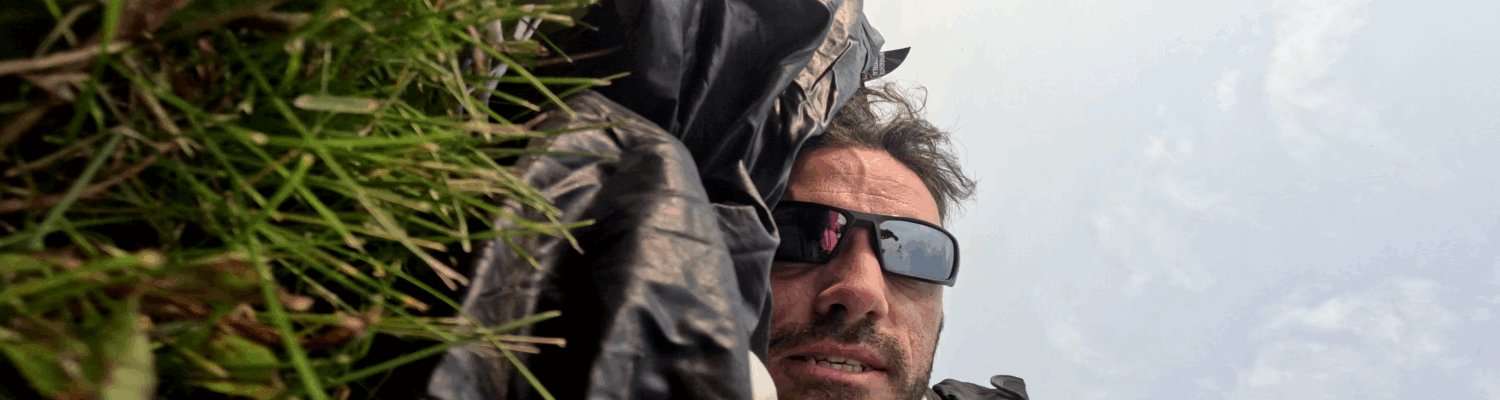
My Activation Story… with Simon Gelinas
Tuesday, December 9, 2025
- Joel Strickland
- 12/09/25
- 0
- Education and training, Saves
Successful skydiving is a complex structure of shared responsibility across all areas, from personal training and experience to institutional oversight and accountability. Using skydiving equipment means entering into a balanced agreement of understanding and application that manufacturers, associations and dropzones take very seriously. Airtec works very hard to ensure that your CYPRES unit functions perfectly, and that the risk parameters within which you jump are as safe as possible.
For the purpose of judging whether the CYPRES unit has saved someone’s life, accidental activations do not count. That said, although seldom, when it does, it is worth talking about. This is particularly true when a highly experienced skydiver is willing to be open and transparent about the details. Skill level and currency help us to be as sharp as possible, but regardless of jump numbers or years in the game, we can all use an occasional reminder to keep us sharp.
Here are Simon’s own words about what happened…
Experience
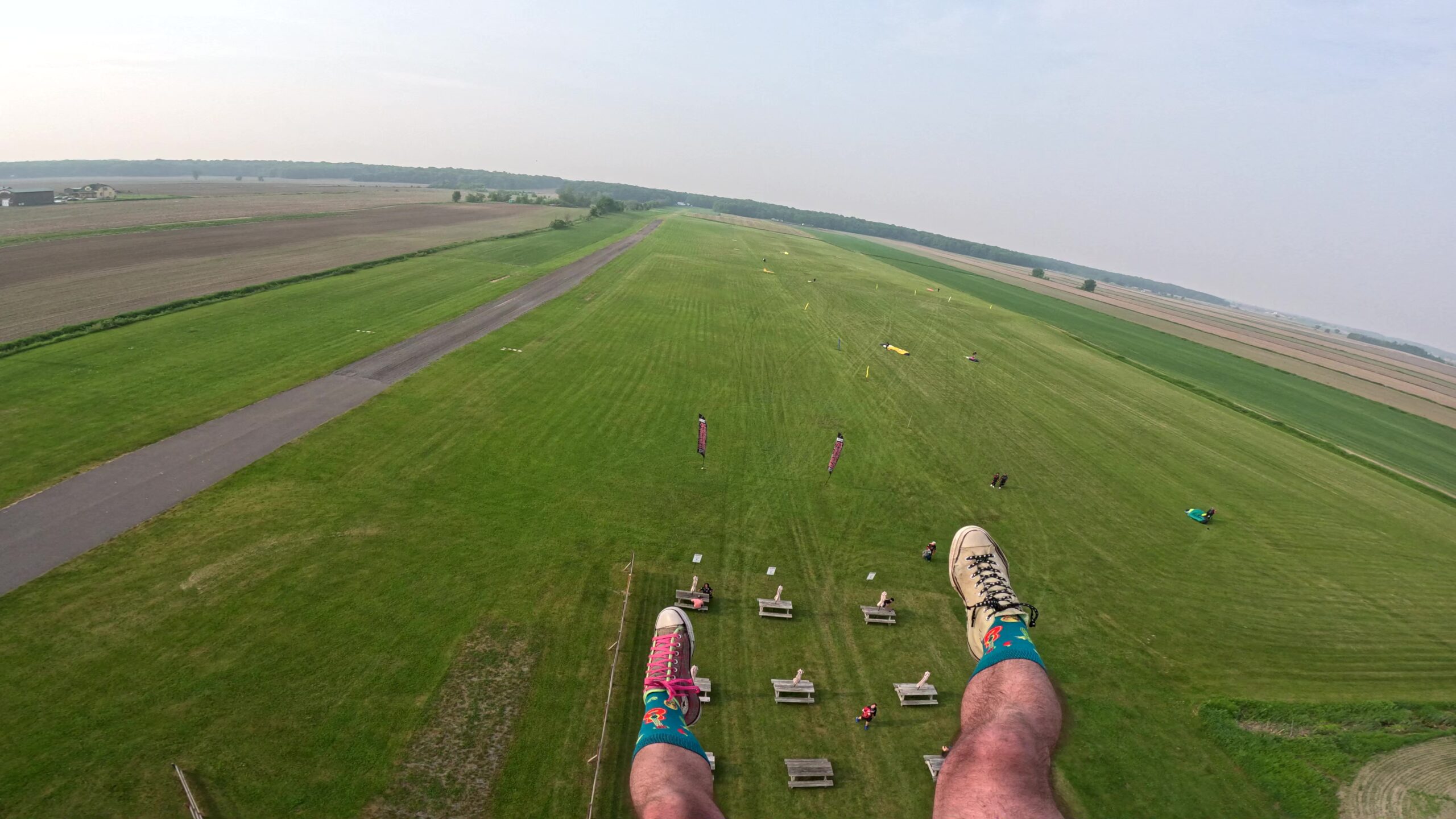
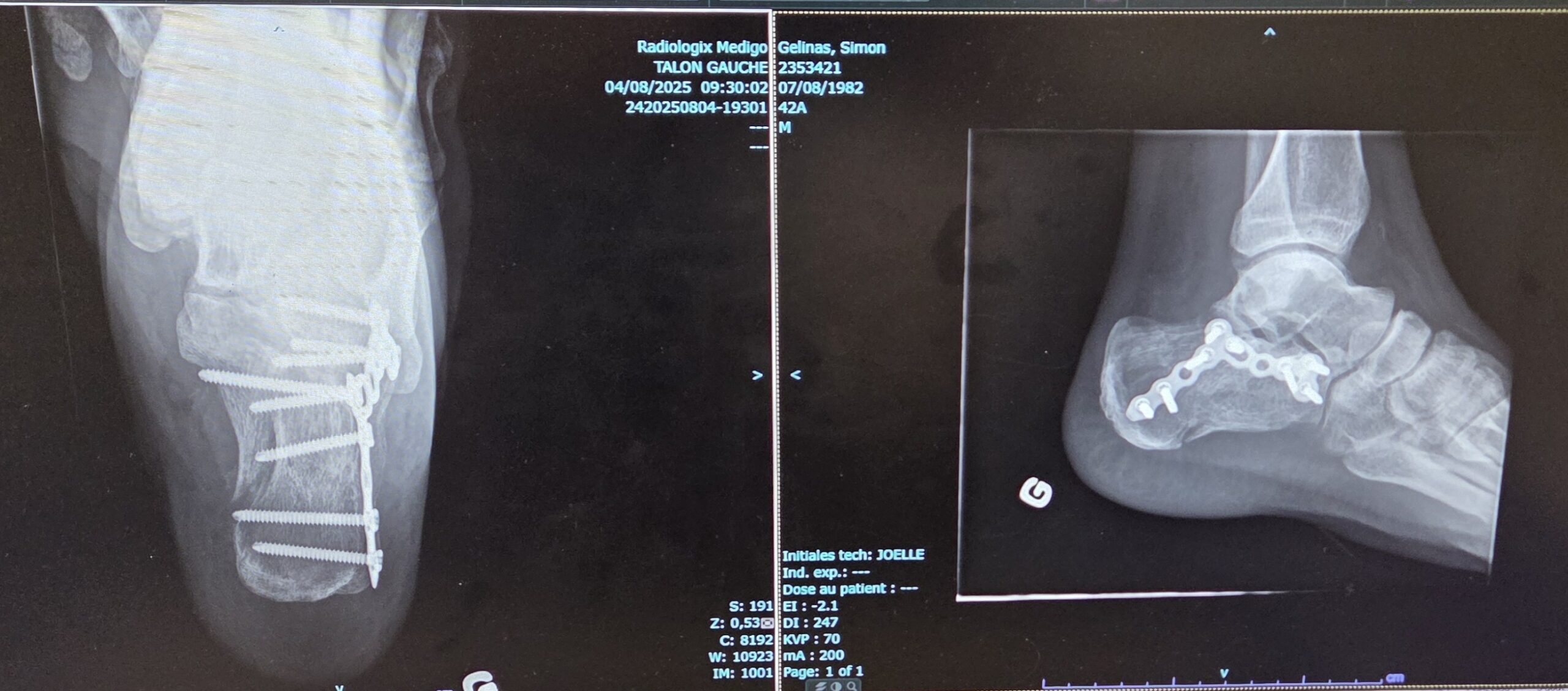
This is for the skydiving community, please share the knowledge, look out for each other and learn. I had a skydiving accident that resulted in a shattered left heel and a hematoma in my abdomen near my bladder. Overall, I am ok, but I needed to have surgery on my heel and ultimately take from nine to twelve weeks before I can put weight on my foot again.
I’ve been skydiving for almost 24 years now with over ten thousand skydivers, and I practice a multitude of disciplines, which include wingsuiting, XRW (both as a wingsuiter and a canopy pilot), freeflying, angles, AFF, tandems and more. I use multiple rigs and different main canopies depending on what type of jumps I’m doing. My freefly rig contains a MARS speed AAD (it came with the rig and will be replaced with a CYPRES), which is set to fire at 101mph (163km/h), and my wingsuit rig has a CYPRES Expert, which is set to fire at 78mph (125km/h).
On the day in question, I did four jumps on my new wingsuit using my wingsuit rig. Then, in preparation for an upcoming trip to Europe, I wanted to test the fit of my HK2 60 in that rig with the idea of only bringing one rig but multiple canopies. I had about a 50-minute call to switch canopies. I even told myself that if I felt rushed, I would get off the load for the next one.
Process
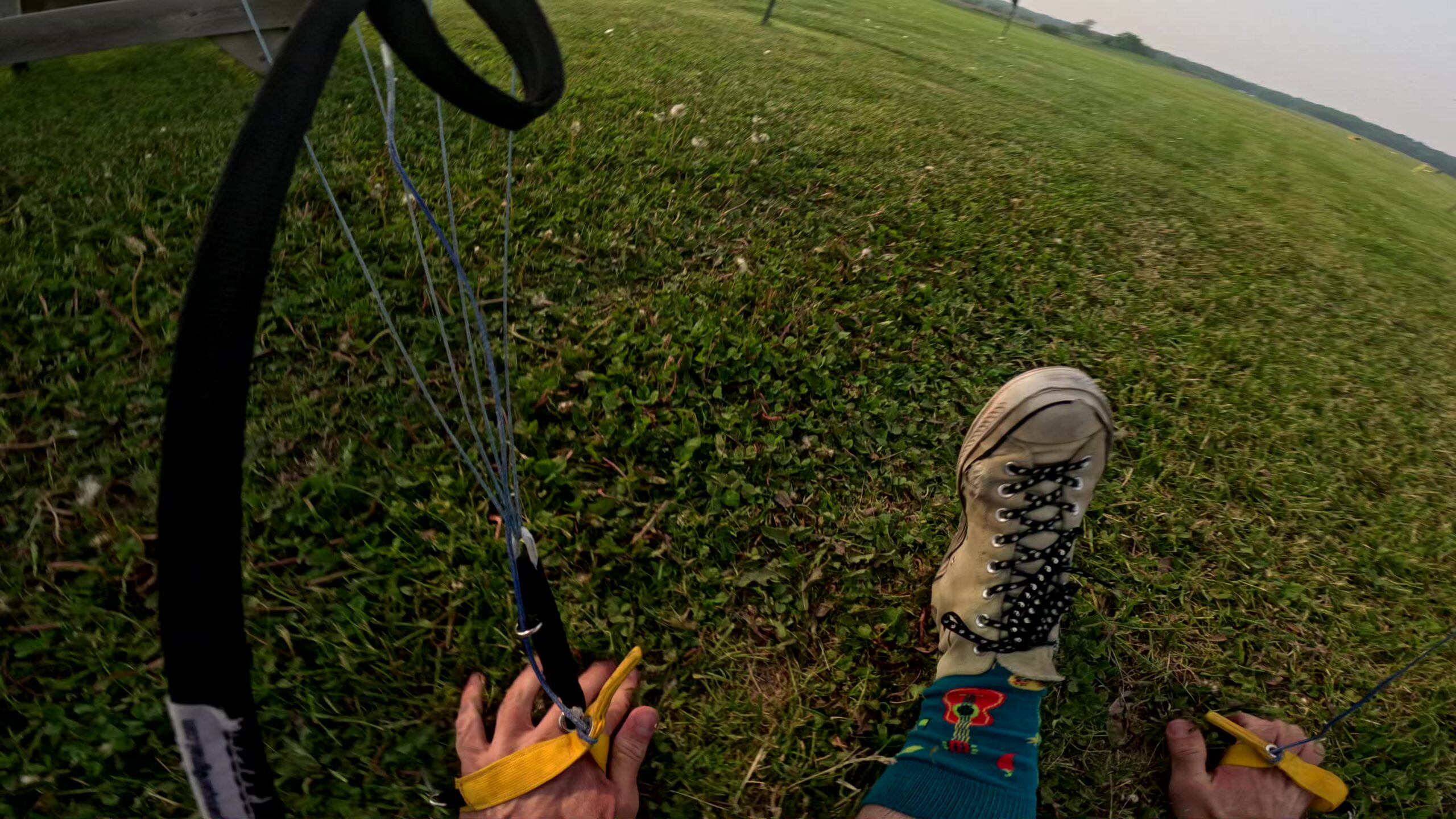
Switching canopies already on risers was easy. The D-Bag I struggled with a little, which made me lose some time. Then I packed and changed the closing loop. Also, I switched over to a GPS tracker that was new to me which took a bit more time. At this point, they called the load to the boarding area (5 minutes), as I grabbed the belly band that I also wanted to switch and put the rig on. Not feeling rushed, I even took the time to show the fit to a colleague rigger as I was very happy to see it was pretty tight. I finished setting up the belly band in the boarding area.
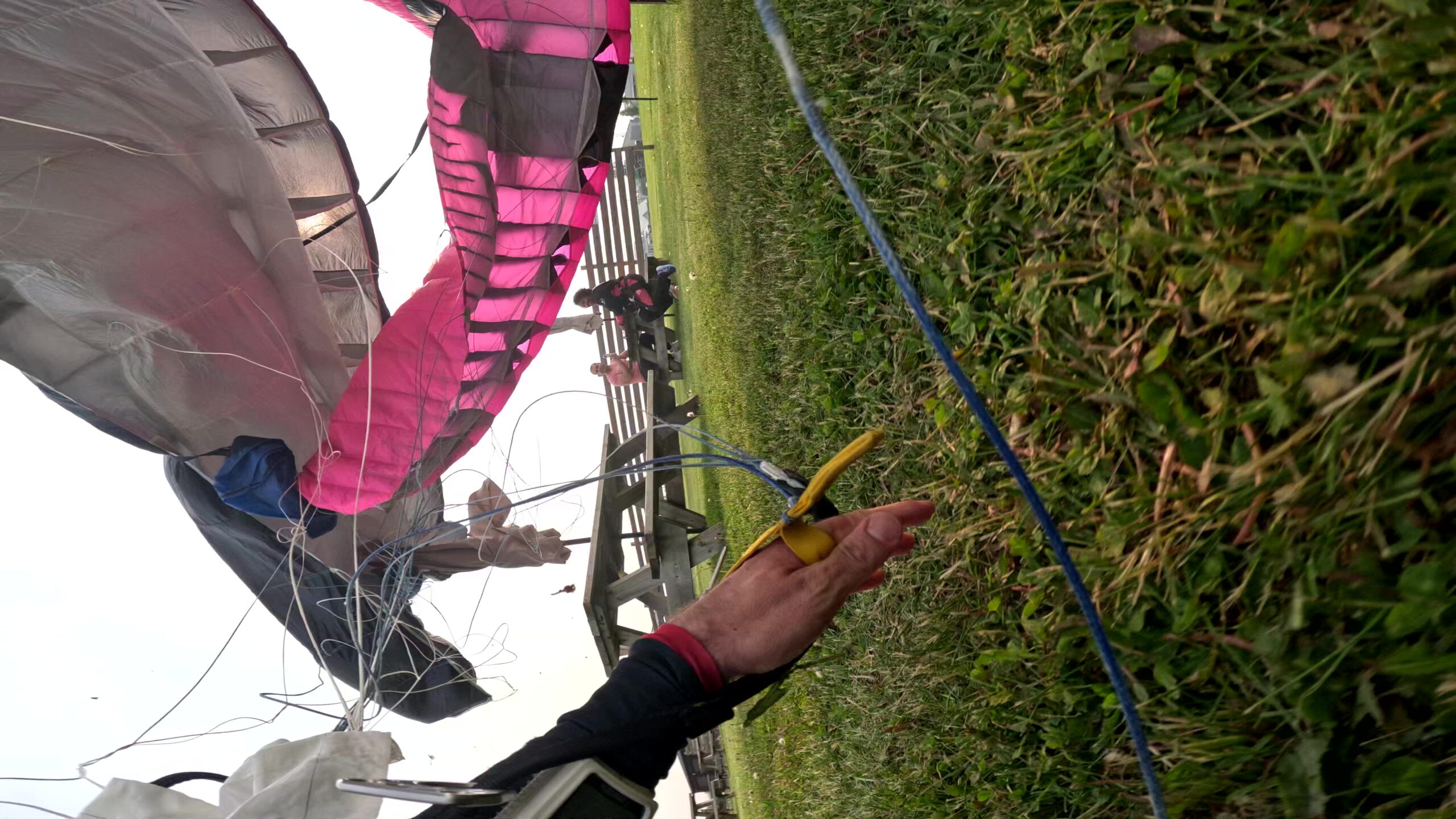
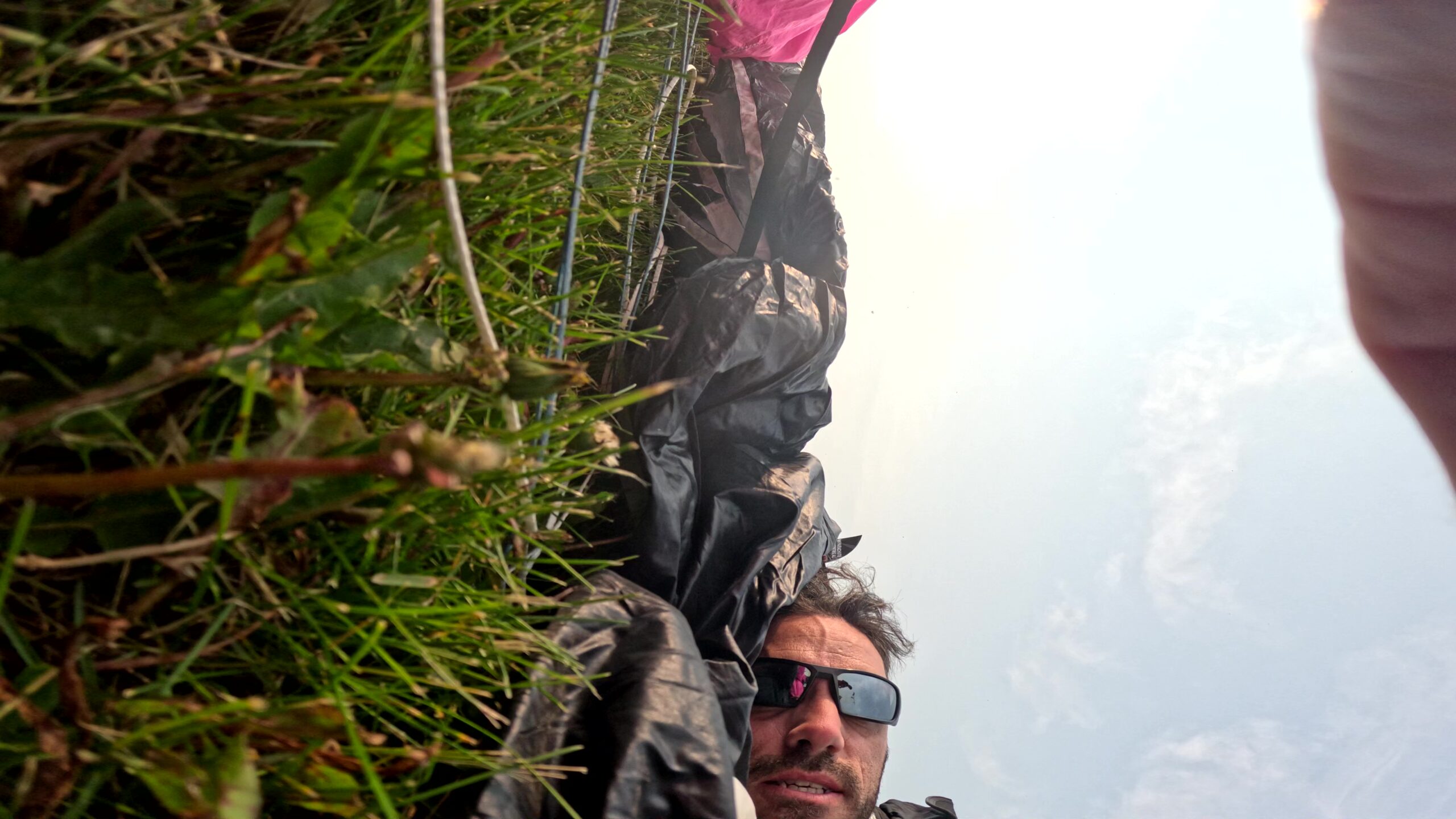
Up to 13,500 feet, I performed a high pull and flew around to get a feel for the wing in this harness. Quite happy with it, I proceeded to my pattern for my swoop and initiated a 630-degree turn at 1450 feet. The turn went as planned and came out exactly where I wanted, looking at my gates. Very shortly after rolling out, I reached the activation speed, and the AAD fired. My reserve fully inflated and prevented me from controlling the rest of the descent (approximately 40 to 60 feet). I did give harness and toggle inputs to try and avoid some obstacles, but I am unsure if they did anything. I hit the ground with my left heel and my pelvis almost at the same time.
Task Loading
I was very aware of the risk management of jumping a 60-square-foot canopy with an AAD, and with everything I had to get done in a short amount of time to prepare for this jump, I forgot to turn off my CYPRES. I most likely even checked the AAD and confirmed it was on as this was my fifth jump on it that day, but honestly, I don’t quite remember. I feel terrible for making such a mistake, but as this sport becomes more and more complex and advanced, both in skill/disciplines and in technology/gear development, mistakes like these are becoming more and more probable since the gear check procedures we spent a long time perfecting are now changing for some of us. Such an easy mistake to make, especially when you are one of those jumpers doing everything, switching between disciplines and sets of gear all day, every day. This can also happen on much bigger canopies and smaller turns. We are definitely in an era where we must begin to think more about the procedures and the gear we use to help everyone stay safer.
Lessons
I already know for myself, I will add a tag on my reserve flap reminding me to check my AAD status on EVERY jump and not just if it is switched on… But one key factor here is to be humble, spread awareness, experience and ideas. Have meetings on your dropzones to discuss this topic. The only way to move is forward, to learn and evolve. Check your gear, look out for each other, ask a swooper if their AAD is ON or OFF. Ask a wingsuiter if their leg straps are on, ask a rigger what they think of your setup, take canopy courses, write to manufacturers to ask questions, or give them feedback. We are all in this together!
Please share this post and help raise awareness.
Finally, I want to express a huge thanks to the whole skydive community, everyone who has reached out. I am very grateful for all the love and support I have received. Special thanks to everyone at Parachute Montreal for their help while I was in the ER.
I love you all.
Simon is not the first and will not be the last skydiver with more than ten thousand jumps to accidentally activate their CYPRES. While it is a rare thing and easy to avoid, his story demonstrates clearly that while highly qualified, the complexity that comes with it can increase the possibility of oversight. He is right – skydiving is developing all the time, and it is the places where the edges overlap that require the assessment process to be on point.
Additionally, quite often, fancy skydivers are the ones who avoid sharing about something that happened to them that perhaps should not have. Talking about it in a public way helps everyone, should be beyond judgment, and doesn’t make you a worse skydiver.
It makes you a better one.
Adventure, Tips, and Adrenaline
Subscribe to Our Newsletter
By signing up for our newsletter you declare to agree with our privacy policy.