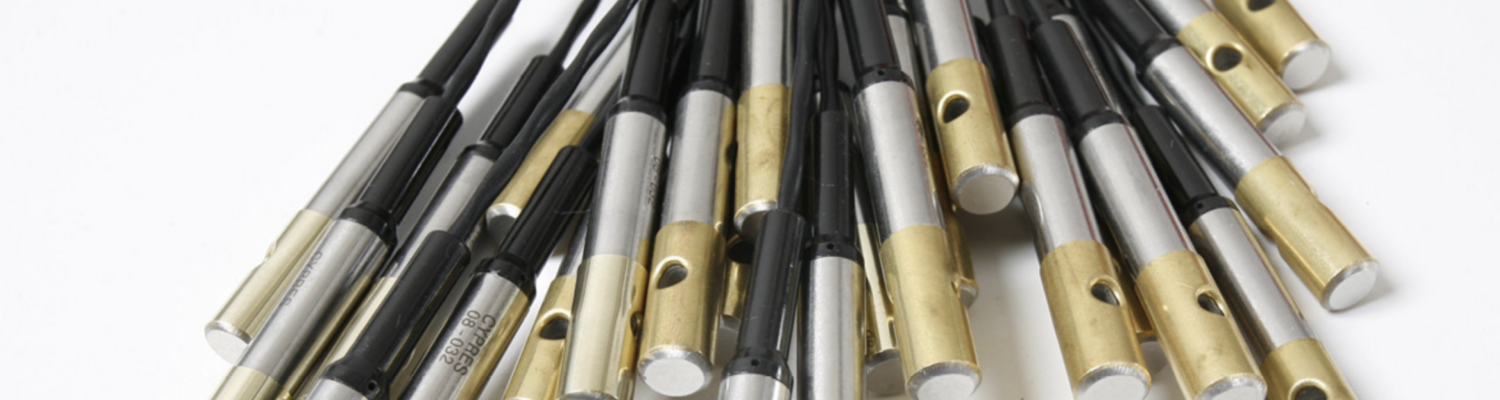
AFF Saves. Normal. Not Normal.
Tuesday, January 6, 2026
- Joel Strickland
- 1/06/26
- 0
- Education and training, Saves
The best version of owning a CYPRES unit is that you spend your entire skydiving career not firing it. A life that is saved because of a CYPRES always involves a little drama (or occasionally some big drama) based on the baseline definition of what has occurred:
Today, my CYPRES fired, and without it, I could be dead now.
Sometimes the stories are hairy, involving freak accidents and unusual circumstances. At other times, the situations are more recognisably straightforward, and the kind of thing that won’t ruffle the feathers of anyone who frequents their local dropzone. Common or routine are not accurate descriptors, as activations during daily skydiving are neither, but an AFF stage three student spinning out on their first release, losing awareness, and landing under an automatically deployed reserve is perhaps the primary reason replacement cutters are required.
Communication
Sharing stories of how the CYPRES saves lives is an important part of our ongoing contribution to safety in the sport, and learning the details helps us to move forward in the right way as skydiving continues to develop and grow. Quite often, people are very open and transparent about what happened, but sometimes a student, an instructor or a dropzone will wish to remain anonymous. Skydiving information culture can be complicated, most likely the result of a small, highly interconnected community dealing daily with risk in ways that the outside world doesn’t properly understand. When someone would rather not have names and places involved, we honour that.
Anyone who has been around skydiving for a minute would reasonably gauge the report below as nothing to get worked up about. The factors involved are managed and mitigated by training, experience and the application of technology. The lesson resides in the universality.
By way of anonymity, this serves to remind us that CYPRES saves of this type have happened all over the world, underlining the quality and necessity of the unit, but also the processes and practices that support safe entry into our sport.
…
Saved by CYPRES: The Importance of Altitude Awareness
One summer morning at a Canadian dropzone, weather conditions were ideal: clear skies and light winds. The student, a man in his early sixties, was on his third jump of the AFF program. His first two jumps had gone smoothly, and this third one looked promising. He was equipped with both a visual altimeter and an audible altimeter with three functioning alarms, all in good condition.
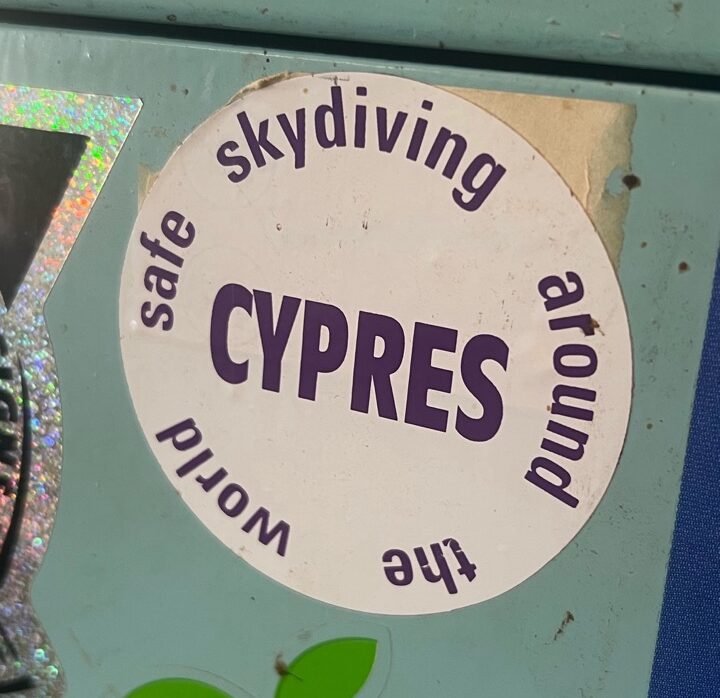
After a good exit from the aircraft, the student performed a proper practice pull. His body position was stable, and he was flying solo, trying to hold his heading. He then unintentionally made a slow 270° left turn, which he managed to stop on his own. Shortly after, he unintentionally initiated two turns to the right—not too fast, but he could not fully control them.
Reading his altimeter, he realised it was time to deploy his parachute. He suddenly pulled his right arm to grab the pilot chute while placing his left hand on top of his helmet. This movement triggered a series of fast right-hand turns. After two more rotations, he flipped onto his back.
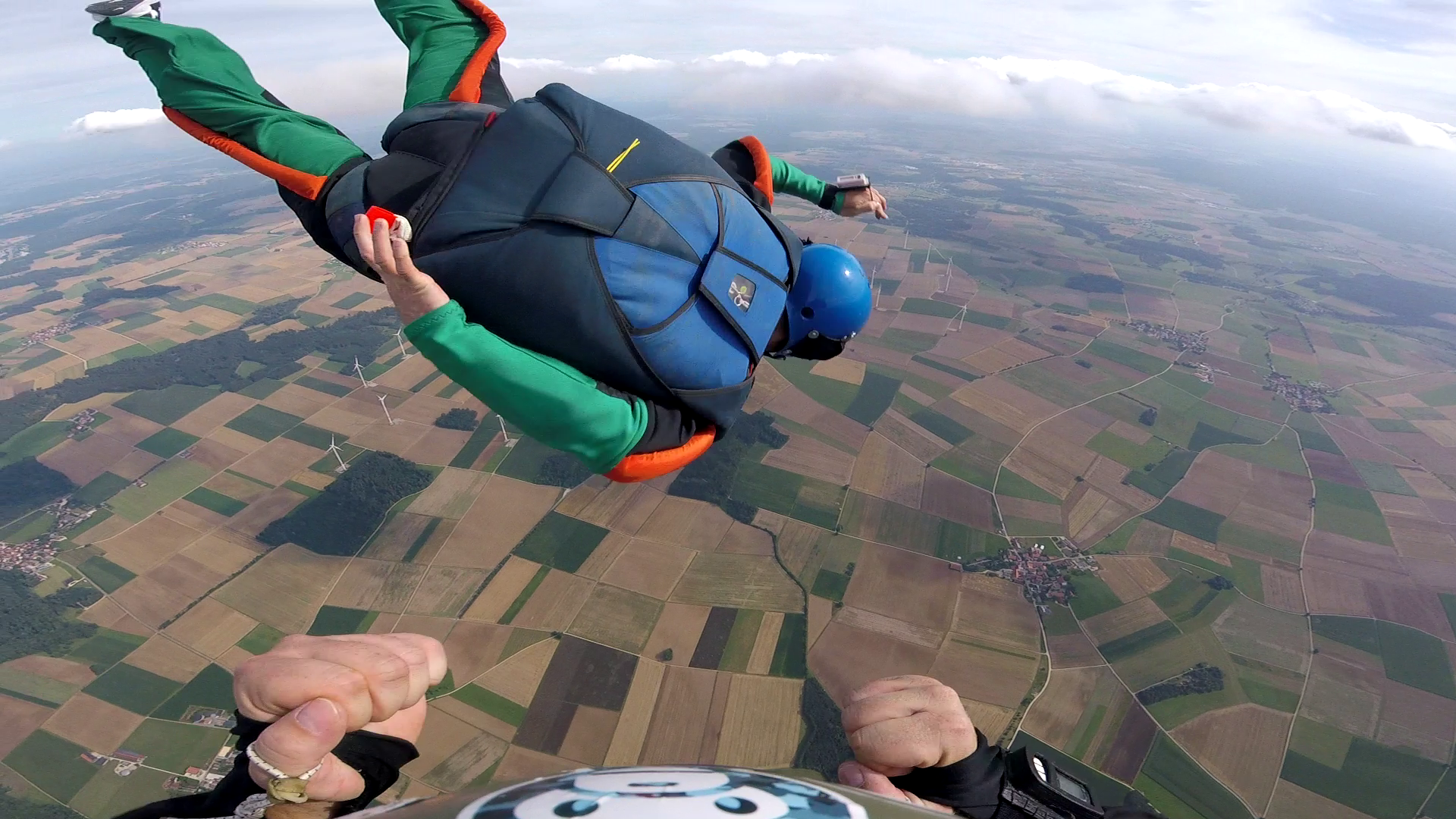
In a nearly stable back-fly position, he kept reaching insistently for his pilot chute handle, without ever paying attention to his altitude. His left hand remained on his helmet, and he never attempted to pull his reserve handle. Despite having both a visual and an audible altimeter with multiple alarms, he never reacted to any altitude warning.
Eventually, when he was already extremely low, his CYPRES Student automatic activation device fired, deploying the reserve parachute. The reserve opened normally, and the student managed to land it safely in a field, facing into the wind.
Analysis
What stands out in this incident is the complete loss of altitude awareness. The student, fully focused on grabbing his pilot chute handle, never considered deploying his reserve and never reacted to the dangerously low altitude—even with multiple altitude warning devices working properly. Being on his back in an unusual situation likely amplified his tunnel vision.
Lesson Learned
Skydiving safety does not rely solely on technical skills, but first and foremost on altitude awareness and the ability to make a decision. When the normal procedure fails, you must act—without hesitation. In this case, the CYPRES saved the student’s life.
…
This save happened somewhere, but could happen anywhere, and Airtec are proud to offer the solution people need.
Adventure, Tips, and Adrenaline
Subscribe to Our Newsletter
By signing up for our newsletter you declare to agree with our privacy policy.